
Constipation relief can mean different things. Sometimes you want to go sooner. Sometimes you want less straining, less bloating, or fewer days where your routine feels off. If constipation happens once in a while, basic habit changes may be enough. If it keeps coming back, it can help to start tracking the pattern instead of trying to remember it later.
This guide covers practical constipation relief basics, common reasons constipation happens, what to watch for, and how a simple bowel movement log can help you understand recurring constipation more clearly.
Important: This article is educational and is not medical advice. If you have severe symptoms, persistent constipation, blood in your stool, vomiting, unexplained weight loss, or a sudden major change in bowel habits, contact a healthcare professional.
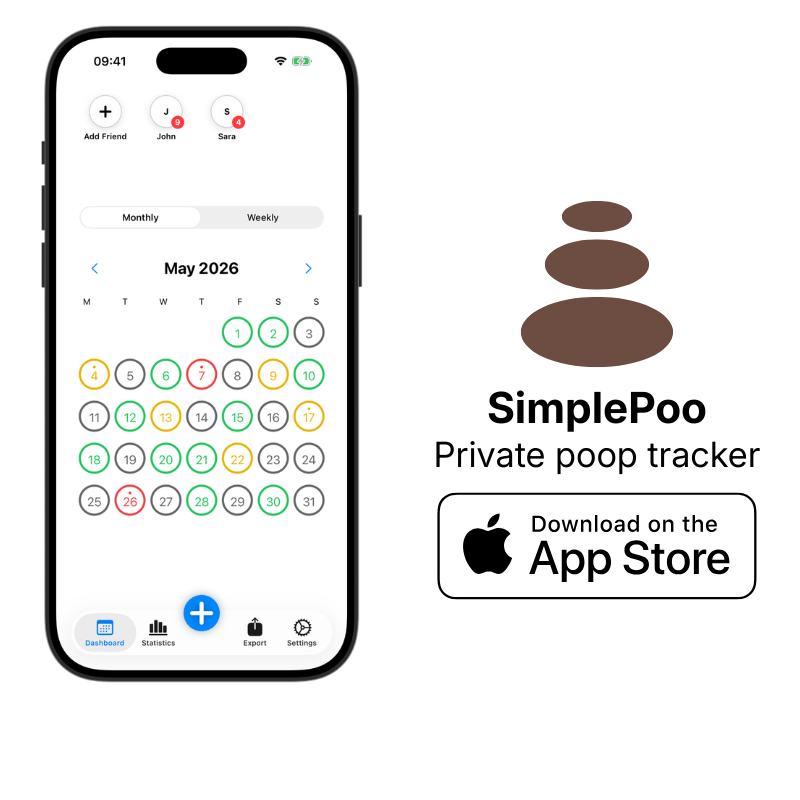
If constipation keeps coming back, SimplePoo can help you keep a private bowel movement log with dates, short notes, regularity trends, and CSV/PDF export.
What Is Constipation?
Constipation usually means bowel movements are less frequent than usual, stools are hard or difficult to pass, or you feel like you have not fully emptied your bowels. Normal frequency varies from person to person, which is why your own pattern matters.
For one person, going every day may be normal. For another, going a few times per week may be normal. The more useful question is often: has your pattern changed?
Common Things That May Help Constipation
Many constipation relief recommendations start with basic habits. Health organizations commonly suggest steps such as eating enough fiber, drinking fluids, staying active, and giving yourself time to use the bathroom when you feel the urge.
These basics may help some people:
- Increase fiber gradually. Fiber from fruits, vegetables, beans, and whole grains can help stool move through the bowel, but adding too much too fast may cause gas or bloating.
- Drink enough fluids. Fluids can help fiber work better and may make stool easier to pass.
- Move your body. Regular physical activity can support bowel motility for some people.
- Do not ignore the urge. Delaying bowel movements can make stool harder and more difficult to pass.
- Build a regular bathroom routine. Some people find it easier to go at a consistent time, especially after meals.
Laxatives and stool softeners may be appropriate for some people, but they are not all the same. If you are unsure what to use, ask a pharmacist or doctor, especially if you are pregnant, managing a health condition, taking medications, or dealing with constipation that keeps returning.
Why Constipation Comes Back
Recurring constipation can have many causes. Sometimes the reason is simple, like travel, dehydration, a change in routine, or a low-fiber diet. Other times it may be related to medications, stress, pregnancy, irritable bowel syndrome, or another health condition.
That is where tracking can be useful. You may not know the cause from memory alone, but a simple record can show whether constipation tends to happen after certain routine changes, during stressful weeks, after travel, or during periods when your bowel movements become less frequent.
When Constipation Becomes a Pattern Worth Tracking
If constipation happens once and goes away, you may not need to track anything. But tracking becomes more useful when:
- Constipation keeps returning
- You are unsure how often you actually go
- You have bloating, cramps, nausea, or other symptoms alongside bowel changes
- You are trying habit changes and want to see what changed
- You want clearer notes before talking to a doctor or nutritionist
Memory is often vague with bowel habits. People tend to remember the uncomfortable days, not the full pattern. A bowel movement log gives you dates instead of guesses.
What to Track During Constipation
You do not need a complicated journal to start. For recurring constipation, the most useful basics are often simple:
- Date of each bowel movement. This helps you see frequency and gaps.
- Short notes. Add brief context such as travel, low water intake, unusual meals, stress, or routine changes.
- Symptoms. If you use Apple Health with SimplePoo, you can log symptoms such as constipation, bloating, abdominal cramps, nausea, vomiting, or diarrhea alongside your bowel movement history.
- Regularity over time. Weekly and monthly trends can show whether things are improving, staying the same, or becoming more irregular.
The goal is not to diagnose yourself. The goal is to have a clearer record of what happened and when.
If Constipation Keeps Coming Back, Keep a Simple Log
SimplePoo is built for this kind of lightweight tracking. You can privately log bowel movement dates, add short notes, and review your regularity over time. If you decide to discuss your bowel habits with a doctor or nutritionist, you can export your history as CSV or PDF instead of relying on memory.
With Apple Health enabled, SimplePoo can also help you log symptoms such as constipation, bloating, abdominal cramps, nausea, vomiting, or diarrhea alongside your bowel movement history.
SimplePoo does not treat constipation and does not replace medical advice. It gives you a clearer record of your bowel movement pattern, which can be useful when constipation is recurring or hard to explain from memory.
Track bowel movement patterns privately with SimplePoo.
When to Get Medical Advice
Constipation is common, but some symptoms deserve medical attention. Contact a healthcare professional if constipation is severe, does not improve, keeps returning, or comes with symptoms such as:
- Blood in your stool
- Severe or worsening abdominal pain
- Vomiting
- Unexplained weight loss
- A sudden major change in bowel habits
- Constipation that lasts longer than usual for you or keeps coming back
If you are not sure whether your symptoms are serious, it is safer to ask a healthcare professional.
Bottom Line
Constipation relief often starts with simple basics: fiber, fluids, movement, routine, and not ignoring the urge to go. But when constipation keeps returning, tracking can make the pattern easier to understand.
A private bowel movement log can help you see how often you go, when gaps happen, and what was different around those days. SimplePoo keeps that process simple: log the date, add a short note, review regularity trends, and export your history if you need a clearer record for a conversation with a doctor or nutritionist.
Leave a Reply